


Living with arthritis doesn't mean you have to give up the joy of cooking. With the right kitchen tools designed for reduced grip strength and joint pain, you can continue preparing delicious meals comfortably and safely. Here's your complete guide to arthritis-friendly kitchen tools that make cooking easier.
Understanding Arthritis Challenges in the Kitchen
Arthritis affects millions of Australians, causing joint pain, stiffness, and reduced grip strength. Common kitchen tasks like opening jars, turning keys, chopping vegetables, and lifting pots can become painful or even impossible. The good news? Ergonomic kitchen tools are specifically designed to address these challenges.
Essential Arthritis-Friendly Kitchen Tools
1. Multifunctional Jar Opener
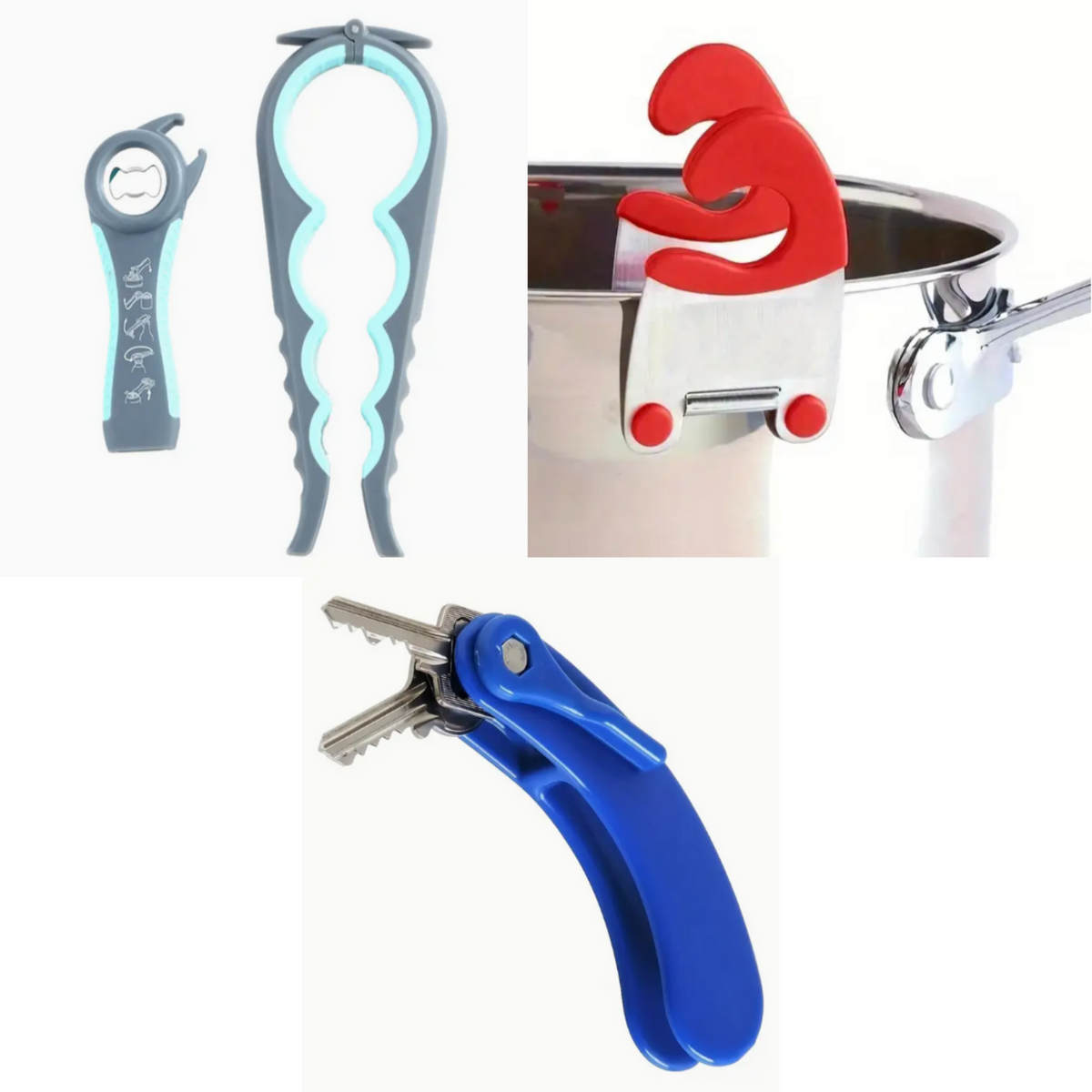
Opening jars is one of the most frustrating tasks for people with arthritis. A quality multifunctional jar opener provides leverage and grip assistance, making it effortless to open everything from pickle jars to medicine bottles. Look for models that work on multiple lid sizes and require minimal hand strength.
2. Ergonomic Utensils with Large Grips
Standard utensils can be painful to hold with arthritic hands. Ergonomic utensils feature larger, cushioned handles that distribute pressure across your palm rather than concentrating it in your fingers. This simple change can make stirring, mixing, and serving much more comfortable.
3. Electric Can Openers
Manual can openers require significant grip strength and twisting motion—both problematic for arthritis sufferers. An electric or automatic can opener does the work for you with just the press of a button.
4. Lightweight Cookware
Heavy pots and pans can strain arthritic wrists and hands. Choose lightweight materials like aluminum or hard-anodized cookware with ergonomic, heat-resistant handles that are easy to grip.
5. Ergonomic Peelers and Knives
Look for vegetable peelers and knives with chunky, non-slip handles that require less grip force. Y-shaped peelers often work better than traditional designs for people with arthritis.
6. Silicone Grip Aids
Silicone jar grippers, bottle openers, and grip pads provide extra traction and reduce the force needed to open containers. They're inexpensive, versatile tools that make dozens of kitchen tasks easier.
7. One-Touch Kitchen Gadgets
From one-touch measuring cups to push-button food choppers, look for gadgets that minimize repetitive hand motions and reduce the need for grip strength.
Kitchen Organisation Tips for Arthritis
Store Items at the Right Height
Keep frequently used items between waist and shoulder height to avoid excessive reaching or bending. Use a grabber/reacher tool for items on high shelves or low cabinets.
Use Lazy Susans
Rotating organisers in cabinets and on countertops eliminate the need to reach and grip items at awkward angles.
Choose Lightweight Dishes
Replace heavy ceramic plates and bowls with lightweight alternatives. Your hands and wrists will thank you.
Cooking Techniques for Arthritic Hands
Prep in Batches
When you're having a good day with less pain, prepare ingredients in batches and freeze portions for later use.
Use Kitchen Scissors
Spring-loaded kitchen scissors with ergonomic handles can often replace knives for cutting herbs, vegetables, and even cooked meats—with less strain on your joints.
Let Appliances Do the Work
Slow cookers, pressure cookers, and food processors can handle tasks that would otherwise require extensive chopping, stirring, or monitoring.
Beyond the Kitchen: Other Helpful Tools
Ergonomic Key Turner
While not strictly a kitchen tool, an ergonomic key turner makes it easier to unlock doors when carrying groceries or heading to the kitchen. The larger grip surface reduces strain on arthritic fingers.
Compression Gloves
Wearing compression gloves while cooking can help reduce joint pain and swelling, improve circulation, and provide gentle support during food preparation.
What to Look for When Shopping
When selecting arthritis-friendly kitchen tools, prioritize these features:
- Large, cushioned handles that distribute pressure evenly
- Non-slip grips that reduce the force needed to hold items
- Lightweight materials that minimize strain
- Ergonomic designs that work with your natural hand position
- Easy-to-clean surfaces that don't require scrubbing
- Quality construction from reputable suppliers
The Emotional Benefits
Maintaining independence in the kitchen isn't just about nutrition—it's about dignity, creativity, and the joy of preparing meals for yourself and loved ones. The right tools can restore confidence and make cooking enjoyable again rather than a painful chore.
Consult Your Healthcare Team
An occupational therapist can assess your specific needs and recommend tools tailored to your condition. They can also teach you joint-protection techniques that minimize strain during cooking.
At Agile Living, we understand the challenges arthritis presents in daily life. Our range of ergonomic kitchen tools and mobility aids is carefully selected to help Australian seniors maintain their independence and continue enjoying the activities they love—including cooking delicious meals.
Remember, investing in the right tools isn't an indulgence—it's an investment in your quality of life, independence, and wellbeing.